A Los Angeles native, Betye Saar is celebrated as a pioneering artist for her works in assemblage that reclaim racist stereotypes about Black Americans and offer visions of unseen worlds. Saar combed personal and collective archives, reconfiguring images and artifacts to produce intimate, even liberatory, reflections on history, memory, and the complexity of Black life.
The artist initially studied design, an academic field that she later reflected was imposed upon her. Noting that “Blacks and other minorities were not encouraged in the arts,” Saar found community within Black- and women-led art spaces. Not one for labels or limiting her practice, Saar eventually championed printmaking. Her earliest works on paper use the soft-ground etching technique. When creating these works, she pressed stamps, stencils, and found materials into her plates to capture their images and textures. Her prints are notably concerned with spirituality, cosmology, and family.
Takin’ a Chance on Luv’
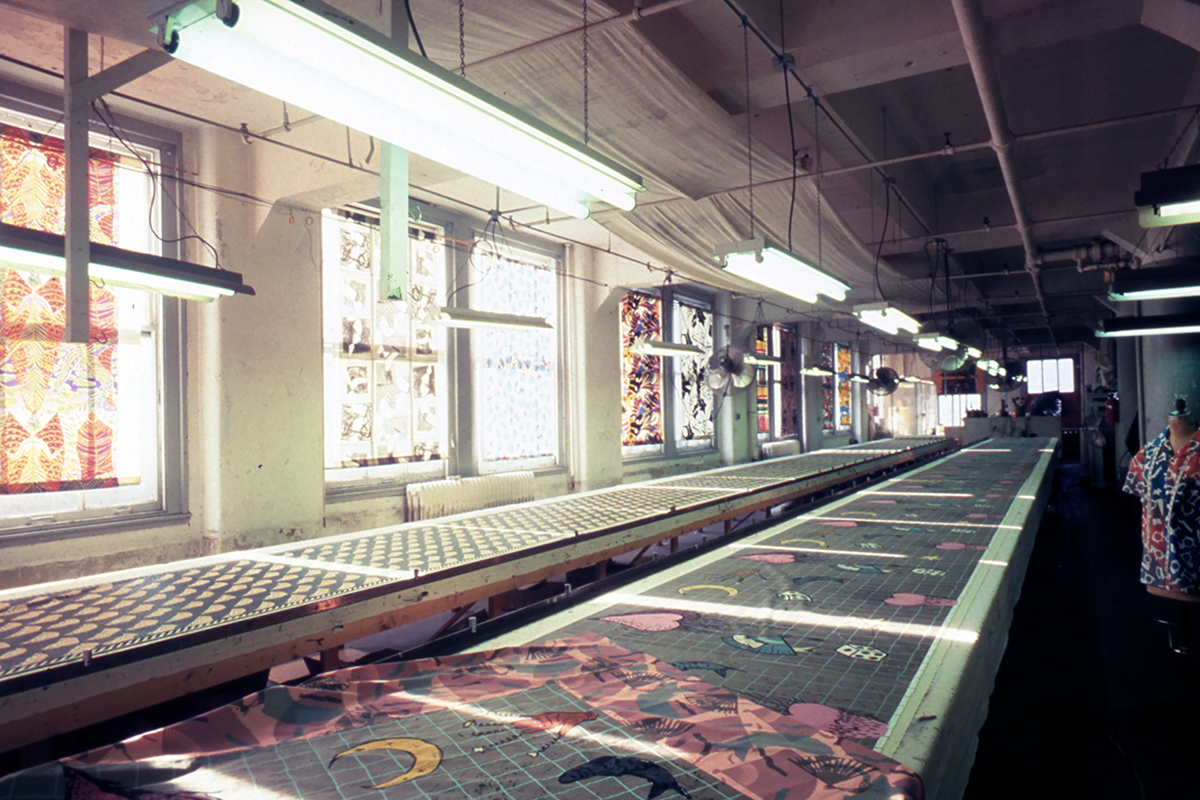
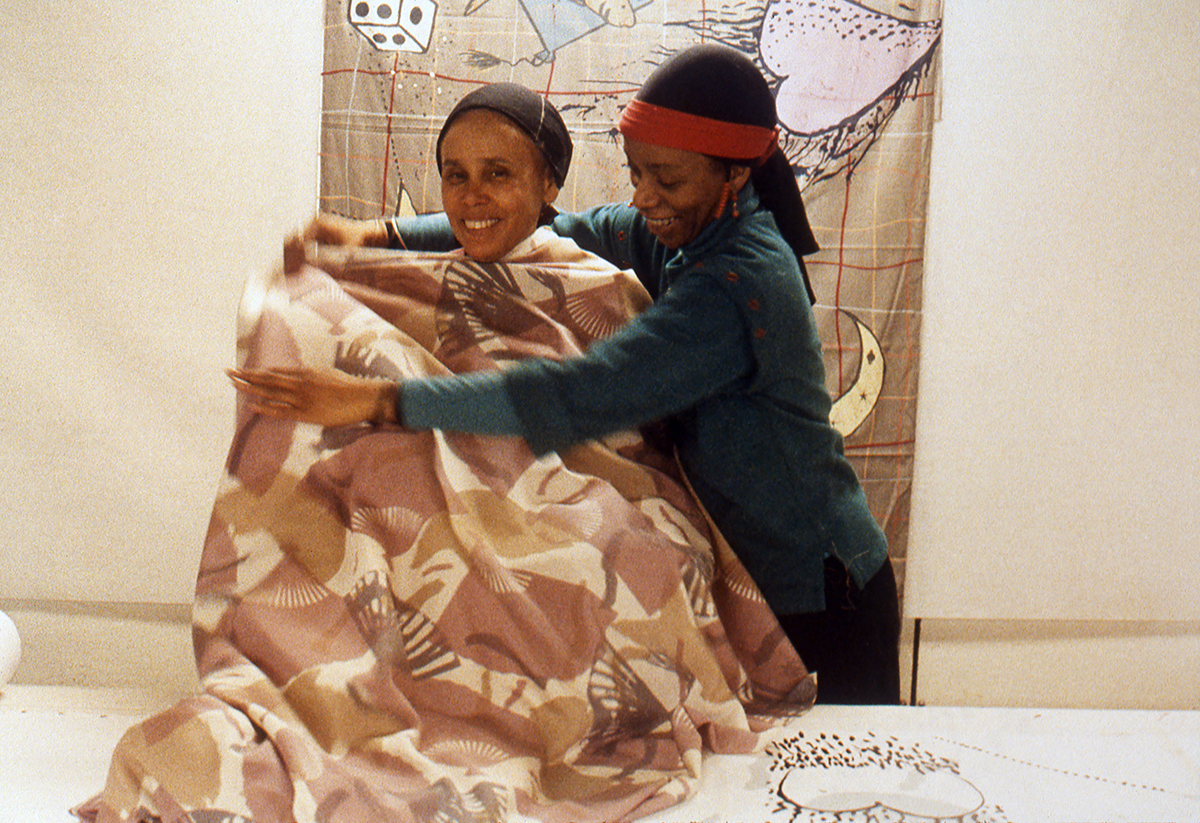
During her 1984 FWM residency, Saar deployed the language of screenprinting to create an edition of duvet covers. In a possible reference to the 1940 Broadway jazz standard, Saar titled her work Takin’ a Chance on Luv.’ The design features a repeating fan pattern that circumscribes a cosmos of mystical symbols. Saar arranges dice, hearts, fish, a moon and star along a grid with energetic linework suggesting mysterious forces at work. An open hand with fingers each pointing toward its own celestial body indicates the artist’s interest in palmistry. Overall, Saar’s print materializes her spiritual belief in otherworldly powers and pathways to liberation.
She also extended her repeat pattern of alternating fans that makes up the border of Takin’ a Chance on Luv’ into its own sculptural wall installation, entitled Fantasies. This project borrows its name and motifs from a quilt Saar created a few years earlier in 1981 with the artist Judy Mathieson.
Movin’ and Shakin‘
Betye Saar returned to create a saleable edition as a benefit for the Workshop in 1987, the same year as her daughter Alison Saar’s FWM residency. Movin’ and Shakin‘, an edition of silk scarves, carries a similar composition to Takin’ a Chance on Luv’. With a familiar arrangement of dice, stars, and crescent moons at play, Saar introduces West African hand drums and beamed eighth notes among her frenetic marks. These motifs appear to dance and move to the rhythm of unheard music.